Despite Resignation, the Veteran Strongman Directs Military Response from the Shadows
Cambodia may have a new prime minister, but when bullets fly, old instincts return. In the wake of escalating border clashes between Cambodia and Thailand, former Cambodian Prime Minister Hun Sen—who officially stepped down in 2023—has stepped back into the spotlight, taking visible and strategic control of his nation’s military response.
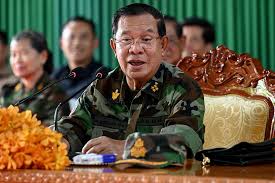
Though holding the ceremonial post of Senate President, Hun Sen was seen actively coordinating defense strategy in a series of photos released via his Facebook page, surrounded by generals, tactical maps, and a conspicuous cup of Starbucks coffee.
The highly publicized imagery left no doubt: Hun Sen remains Cambodia’s de facto power center, even as his son, Hun Manet, serves as the official head of government.
“He’s the one directing the optics, the troop movements, the national narrative,” said a diplomat based in Phnom Penh. “It’s Hun Sen’s show—even now.”
The Clashes: What Sparked the Cambodia–Thailand Border Firestorm?
Longstanding Territorial Disputes Turn Deadly
The fighting erupted last week along a contested stretch of the 817km border that has been a flashpoint for decades. Tensions began rising in May 2025 after the death of a Cambodian soldier during a localized skirmish. Despite diplomatic efforts, both nations continued a tit-for-tat escalation.
When Cambodian artillery reportedly struck civilian zones in Thai territory, Bangkok hit back—naming Hun Sen directly in a rare and provocative statement.
“The Cambodian government, led by Samdech Akka Moha Sena Padei Techo Hun Sen, is behind these appalling attacks,” the Thai army said, assigning personal blame to the former premier.
A Leader in Uniform: How Hun Sen Reasserted Control
Facebook Posts, Military Briefings, and Viral Optics
Within hours of the outbreak of violence, Hun Sen launched a social media campaign, posting pictures in military fatigues, sitting at command tables, and addressing troops via video conference.
“He has always monitored and kept observing the situation all the time,” said Cambodian foreign policy official Lim Menghour.
The imagery struck a chord among nationalists and party loyalists. The visuals also confirmed what insiders have long whispered: Hun Sen’s grip on Cambodia’s strategic affairs has never loosened.
Observers say he functioned as the logistics commander of Cambodia’s frontline response—effectively bypassing his own son, Hun Manet, who remained relatively silent in the early phase of the crisis.
Hun Manet’s Low Profile: A Calculated Silence or Political Handcuff?
A Four-Star General Who Waited for the Ceasefire
Hun Manet, a U.S.-educated general and West Point graduate, was largely absent from public messaging during the first few days of the conflict. Instead, he prepared for diplomatic efforts, including peace talks in Malaysia that ultimately helped broker a ceasefire.
Insiders suggest that despite holding the title of prime minister, Manet remains tethered to the policies—and shadow—of his father.
“So, the prime minister must respect and follow the party’s policy and president,” said Chhay Sophal, an author and political commentator.
This situation highlights a political paradox: Manet has the credentials, but Hun Sen still wields the credibility and command.
A Leaked Phone Call and Political Fallout in Thailand
Thai PM’s Call to Hun Sen Backfires, Sparks Domestic Scandal
The border flare-up also exposed fissures in Thai politics. In mid-June, Thai Prime Minister Paetongtarn Shinawatra called Hun Sen in a private attempt to de-escalate tensions. But part of the call was leaked—painting Paetongtarn as overly deferential to the Cambodian strongman.
Hun Sen then released the entire recording, triggering political chaos in Thailand and straining ties with the Shinawatra dynasty, once seen as an ally.
In a three-hour televised tirade, Hun Sen publicly rebuked Paetongtarn and her father, Thaksin Shinawatra, exposing the fragility of regional alliances.
“Before the flare-up, he was very much right there in your face,” said a regional diplomat. “He was making all the pronouncements.”
From Rice Fields to Power Broker: The Evolution of Hun Sen
A Survivor of War, Revolution, and Regional Geopolitics
Born to farmers in a province devastated by U.S. bombings, Hun Sen’s rise to power is one of Southeast Asia’s most dramatic political sagas. A former Khmer Rouge fighter who defected to Vietnam, he returned as foreign minister after Vietnam overthrew the regime, eventually ruling Cambodia for nearly 40 years.
During his tenure:
-
GDP per capita quadrupled, from US$240 in 1993 to over US$1,000 by 2013
-
Political opposition was neutralized through arrests, media suppression, and judicial maneuvers
-
Power was consolidated in the hands of a select elite, with critics decrying widespread corruption
Even after handing power to his son in 2023, Hun Sen’s political machinery remained intact.
“It hasn’t surprised anyone that he’s taken the lead,” said a Cambodia-based diplomat. “Everyone knew he was still in charge.”
What This Means for Regional Stability and CEOs Watching from Afar
Lessons for Business Leaders Navigating Political Risk in Southeast Asia
This crisis offers several key takeaways for multinational corporations, investors, and policy strategists:
-
Leadership transitions may not reflect actual power shifts: Always assess the real influencers behind policy decisions.
-
Nationalism can override diplomacy: Regional flare-ups may derail international agreements or supply chain stability.
-
Personalized diplomacy is volatile: Reliance on individual relationships, like that between the Shinawatras and Hun Sen, creates fragility.
-
Market access could hinge on political alignment: In Cambodia, alignment with the ruling party—led de facto by Hun Sen—remains crucial.
-
Social media remains a strategic battleground: Leadership narratives are now shaped in real-time, with geopolitical consequences.
For companies with stakes in agriculture, mining, telecom, infrastructure, or consumer goods in the region, understanding the political chessboard is more important than ever.
Hun Sen Never Left
In a Crisis, the Old Guard Returns
The recent Cambodia–Thailand conflict has served as a case study in soft succession: power may change hands ceremonially, but not operationally. Hun Sen, through sheer will, legacy, and control of the ruling party, has shown he remains the true commander.
Whether Cambodia sees long-term generational change or reverts further into dynastic rule is unclear. But one thing is certain: when shots are fired, it’s still Hun Sen who answers the call.

More Stories
From Mushrooms to Murder Plots: The Chilling Case of Erin Patterson
Trump Tipped for Nobel Peace Prize After Cambodia Credits Him With Ending Deadly Border Clash With Thailand
Hezbollah Explodes in Rage as Lebanon Moves to Disarm Militias—Israel Keeps Bombing, US Pulls Strings