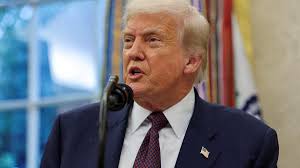
A Surprise Nomination That Mixes Geopolitics, Trade, and Diplomacy
In an unexpected twist on Southeast Asia’s tense political landscape, Cambodian Prime Minister Hun Manet has formally nominated U.S. President Donald Trump for the Nobel Peace Prize, citing his “visionary and innovative diplomacy” in brokering an abrupt end to the region’s deadliest border conflict in more than a decade.
The move, announced on Thursday, adds another layer to Trump’s long-standing pursuit of international recognition for his conflict mediation skills—and comes at a time when Cambodia and Thailand were not only locked in military hostilities, but also staring down crippling U.S. trade tariffs.
The Conflict: Five Days, 43 Dead, and a Fragile Border
The dispute erupted late last month, when a long-simmering territorial disagreement between Cambodia and Thailand escalated into a five-day shooting war, leaving at least 43 people dead and sparking fears of a broader regional crisis.
The fighting, which began on July 24, was the most severe along the two countries’ border in over a decade. Beyond the human cost, the clashes threatened to destabilize a region already balancing competing influences from China, the U.S., and ASEAN leadership.
Trump’s Role: Diplomacy With Teeth
According to Hun Manet’s letter to the Norwegian Nobel Committee, the turning point came when President Trump engaged in direct phone diplomacy with leaders in both Phnom Penh and Bangkok. His intervention was not conducted in isolation—it was supported by:
-
Malaysian Prime Minister Anwar Ibrahim, in his role as ASEAN chair.
-
A delegation of Chinese negotiators, working in parallel to de-escalate tensions.
Within days, both Cambodia and Thailand agreed to an immediate and unconditional ceasefire. Hun Manet praised Trump’s “decisive role”, saying it prevented further bloodshed and “paved the way towards the restoration of peace.”
Trade Leverage: Tariffs as a Negotiating Weapon
While the Nobel nomination focuses on Trump’s peace efforts, the diplomatic story cannot be separated from the economic dimension. At the time of the conflict, both Cambodia and Thailand faced looming U.S. tariffs of 36 percent on certain exports—a level that could have devastated their manufacturing and agricultural sectors.
After the ceasefire, both countries secured a reduced tariff rate of 19 percent, significantly softening the blow. This carrot-and-stick approach—combining military de-escalation with economic incentives—highlighted Trump’s trademark transactional diplomacy.
A Blend of Hard and Soft Power
The U.S. president’s ability to leverage economic tools alongside personal diplomacy mirrors strategies used in past negotiations, from the Korean Peninsula to Middle East accords. For Cambodia, publicly nominating Trump may serve two purposes:
-
Rewarding him for his intervention, reinforcing goodwill in future trade talks.
-
Sending a diplomatic signal to other global powers—especially China—that Phnom Penh can operate flexibly within multiple spheres of influence.
The Nobel Process: Symbolism Over Substance?
The Norwegian Nobel Committee does not release its nominee list publicly, and the formal deadline for nominations was January 31 of this year. While Hun Manet’s nomination may not be considered for the 2025 prize cycle, such gestures carry political weight even without immediate procedural consequences.
For Trump, the nomination joins previous endorsements from Pakistan and Israeli Prime Minister Benjamin Netanyahu. Whether or not these translate into an actual award, the symbolic value bolsters his narrative as a global peacemaker—a theme he has repeatedly used in domestic political campaigns.
Regional Context: Cambodia’s Balancing Act
Hun Manet’s decision to credit Trump also fits into a broader pattern of Cambodia’s diplomatic maneuvering. While China remains its largest foreign investor and political ally, Phnom Penh has shown a willingness to diversify its partnerships, particularly when Western engagement brings tangible economic benefits.
By linking Trump’s peace-brokering to tariff relief, Cambodia positions itself as a pragmatic actor—capable of working with both Beijing and Washington when national interests align.
Thailand’s Perspective
For Thailand, accepting U.S.-brokered peace likely came with the understanding that continued conflict could invite greater Chinese influence over Cambodia and potentially isolate Bangkok in ASEAN deliberations. The ceasefire provides breathing room for domestic political priorities while avoiding a prolonged military drain on resources.
Implications for Business and Investors
The intersection of geopolitical conflict, trade policy, and diplomatic recognition offers several takeaways for corporate leaders and investors:
-
Political Stability Is Fragile: The suddenness of the border escalation shows how quickly operational risk can spike in Southeast Asia, even in established trade corridors.
-
Trade Leverage Works: The U.S. continues to use tariffs not only as an economic tool but as a diplomatic instrument. Businesses with exposure to the region should watch for similar patterns in future disputes.
-
Image Management Matters: Public gestures like Nobel nominations can be part of a larger narrative strategy to stabilize investor confidence and signal cooperation to global markets.
Risk Assessment for 2025–2026
-
Short-term: The ceasefire is holding, but without a comprehensive border agreement, the risk of renewed skirmishes remains.
-
Medium-term: U.S. tariff policy will remain a wildcard for ASEAN exporters, particularly in politically sensitive states.
-
Long-term: The region’s balance between U.S. and Chinese influence will shape not only political alliances but also trade routes, infrastructure funding, and capital flows.
From Battlefield to Boardroom
For executives operating in ASEAN markets, the Cambodia-Thailand border episode is a reminder that non-market forces—politics, diplomacy, and even personal relationships between leaders—can dramatically alter market conditions overnight.
Trump’s Nobel nomination, whether symbolic or substantive, signals that Southeast Asian states are willing to publicly reward global powers when interventions bring swift and tangible results. For the U.S., it reinforces the idea that trade leverage paired with diplomatic pressure can achieve outcomes that pure military or economic policy alone might not.
Cambodia’s decision to nominate Donald Trump for the Nobel Peace Prize is more than a headline—it’s a case study in transactional diplomacy. By tying together conflict resolution and trade relief, the episode illustrates how 21st-century statecraft often requires blending hard power, soft power, and personal brand politics.
For business leaders, the lesson is clear: in a world where economic and political dynamics are increasingly intertwined, staying informed on geopolitical shifts is not just risk management—it’s a competitive advantage.


More Stories
From Mushrooms to Murder Plots: The Chilling Case of Erin Patterson
Hezbollah Explodes in Rage as Lebanon Moves to Disarm Militias—Israel Keeps Bombing, US Pulls Strings
Active-Duty Soldier Fires at Colleagues at Fort Stewart