A National Crisis Unfolds Amid War, U.S. Pressure, and Deep Divisions
Lebanon’s fragile political landscape is in upheaval after Prime Minister Nawaf Salam’s government moved to disarm Hezbollah—an unprecedented step that triggered outrage from the militant group and prompted a dramatic cabinet walkout by its ministers. The move comes amid heavy pressure from the United States and relentless Israeli bombardment, as fears grow of a regional escalation.
At the heart of the crisis: a plan to restrict weapons in Lebanon solely to government forces, effectively sidelining Hezbollah’s military wing by year-end. Hezbollah, long considered a state-within-a-state due to its independent military and political power, has responded with fury—calling the decision a “grave sin” and warning of consequences for Lebanese sovereignty.
Hezbollah: “We Will Treat This Decision as if It Does Not Exist”
Resistance or Rebellion? The Group’s Defiant Response
In a strongly worded statement released Wednesday, Hezbollah accused the Lebanese government of betraying the nation’s resistance posture and bending to U.S. and Israeli pressure. “This decision undermines Lebanon’s sovereignty and gives Israel a free hand to tamper with its security, geography, politics and future existence… Therefore, we will treat this decision as if it does not exist,” the group declared.
The statement pointed fingers at U.S. envoy Tom Barrack, alleging that the disarmament decision was dictated by Washington and “fully serves Israel’s interests.” According to Hezbollah, the move will leave Lebanon “exposed” and defenseless against future Israeli aggression.
Two Hezbollah-aligned ministers and allies from the Amal movement walked out of the cabinet meeting in protest, calling the decision an American-imposed capitulation that threatens Lebanon’s independence.
Cabinet’s Plan: Disarmament by December, Details by August
What the Government Wants—and Why Now
Prime Minister Nawaf Salam’s plan assigns the Lebanese army the task of developing a strategy to bring all weapons under state control by the end of 2025. The army is expected to submit this roadmap by the end of August, and discussions will resume in a scheduled cabinet meeting on Thursday.
The government says this move is part of implementing the terms of a U.S.-backed November ceasefire agreement, which aimed to end over a year of hostilities between Hezbollah and Israel. That ceasefire, however, has been fragile at best—with Israeli strikes continuing and Hezbollah insisting no disarmament talks can proceed under fire.
Israel Intensifies Attacks as Cabinet Debates Disarmament
Tulin Bombed, Southern Lebanon Under Siege
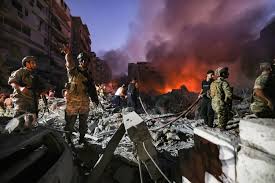
On the same day Hezbollah issued its warning, Israeli forces launched another wave of air strikes across southern Lebanon. The Health Ministry reported one fatality and multiple injuries in Tulin and other towns. The Israeli military claimed it had targeted “weapons storage facilities, a missile launcher and Hezbollah terrorist infrastructure.”
The violence only amplifies Hezbollah’s argument: that disarmament amid ongoing conflict is tantamount to surrender. “We are open to dialogue… but not under Israeli fire,” Hezbollah said. The group insists that before any national security dialogue can begin, Israel must stop its aggression and withdraw from disputed Lebanese territories.
Political Fallout: Walkouts, Divisions, and a Fragile Coalition
Who’s Backing the Government—and Who’s Not
Lebanon’s political factions are sharply divided. While Hezbollah and Amal boycotted the cabinet meeting, other parties supported the disarmament initiative:
-
Lebanese Forces – a major Christian party and longtime Hezbollah opponent – hailed the move as “a pivotal moment in Lebanon’s modern history” and “a long-overdue step toward restoring full state authority.”
-
Free Patriotic Movement (FPM) – once an ally of Hezbollah – signaled its willingness to support transferring Hezbollah’s weapons to the Lebanese army, “to strengthen Lebanon’s defensive power.”
These statements underscore a significant political realignment: even Hezbollah’s former allies are beginning to distance themselves as the group suffers political and military setbacks.
U.S. Influence and Iranian Silence: External Powers Weigh In
Washington’s Pressure, Tehran’s Caution
The disarmament move appears to be heavily influenced by U.S. diplomatic efforts. Envoy Tom Barrack has reportedly pushed for a concrete disarmament timetable as a condition for further aid and political normalization. Hezbollah views this as American tutelage—another step in undermining Lebanon’s independence.
On the other side, Iran—the group’s chief patron—offered a notably subdued reaction. Iranian Foreign Minister Abbas Araghchi said in a televised interview that while Tehran supports Hezbollah “from afar,” it would not interfere in the group’s decisions. “Any decision on disarmament will ultimately rest with Hezbollah itself,” Araghchi said, noting that the group has already begun “rebuilding” after losses in its most recent war with Israel.
What Happens Next: Dialogue or Detonation?
Thursday’s Cabinet Meeting Could Decide Lebanon’s Future
All eyes now turn to the Lebanese cabinet meeting scheduled for Thursday. With Hezbollah out of the room, the government faces a crucial test: can it hold the political center, implement its plan, and maintain legitimacy while Hezbollah openly defies its authority?
The meeting could serve as an inflection point. Hezbollah’s Amal allies have called it “an opportunity for correction,” suggesting the door to compromise may not be fully closed. However, if no concessions are made—and Israeli strikes continue—the risk of total political collapse or renewed civil conflict cannot be ruled out.
A Dangerous Gamble for Sovereignty
Lebanon’s attempt to bring all weapons under state control is a bold but perilous gamble. It aims to reassert national sovereignty, align with U.S. policy goals, and reduce Hezbollah’s war-making powers. But with bombs falling, factions walking out, and Hezbollah vowing noncompliance, the road ahead is fraught with danger.
If successful, the move could mark a new era for Lebanon—a fragile state finally breaking free from militia rule. But if it fails, it may deepen sectarian divides and push the country closer to collapse.


More Stories
From Mushrooms to Murder Plots: The Chilling Case of Erin Patterson
Trump Tipped for Nobel Peace Prize After Cambodia Credits Him With Ending Deadly Border Clash With Thailand
Active-Duty Soldier Fires at Colleagues at Fort Stewart