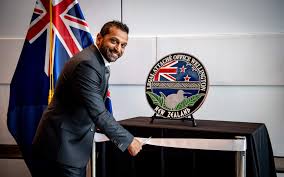
New Permanent Office Marks First Major Expansion Amid Geopolitical Tensions
In a bold step to counter what it sees as an escalating threat from Beijing, the United States Federal Bureau of Investigation (FBI) has officially opened a permanent office in Wellington, New Zealand. FBI Director Kash Patel, during a high-level diplomatic visit, confirmed the strategic move on Thursday, underscoring the agency’s need for stronger international partnerships to “counter the Chinese Communist Party (CCP).”
“The FBI cannot do it alone,” Patel said during a statement issued via the US Embassy in Wellington. “Our partners in the Five Eyes are our greatest allies around the world. But we need all of them… to get after the fight and put the mission first.”
The expansion into New Zealand signals a broader shift in Washington’s intelligence posture in the Indo-Pacific, reflecting growing concern over Chinese political influence, cyber warfare capabilities, and regional power plays.
Why New Zealand?
Five Eyes Alliance Gets Tactical Boost from FBI’s Pacific Insertion
New Zealand is a key member of the “Five Eyes” intelligence-sharing alliance, which also includes the United States, United Kingdom, Canada, and Australia. Traditionally known for its diplomatic neutrality and softer stance on China, New Zealand’s willingness to host the FBI marks a significant geopolitical shift — aligning more openly with Western intelligence priorities.
The new office will be tasked with:
-
Investigating terrorism and transnational threats
-
Cyber crime and fraud detection
-
Combating organized crime and money laundering
-
Preventing child exploitation
-
Tracking foreign intelligence operations, including Chinese espionage activities
It will also support FBI partnerships across the broader Pacific, including Antarctica, Samoa, Niue, the Cook Islands, and Tonga, giving the bureau a wider regional reach.
“Some of the most important global issues of our times are the ones that New Zealand and America work on together,” said Patel, reaffirming the depth of the bilateral relationship.
Countering China: The Unspoken Urgency
Beijing’s Expanding Influence Forces Western Intelligence Agencies to Coordinate
Although no direct accusation was formally issued during Patel’s visit, the subtext was clear — the CCP’s growing international presence, particularly in the Pacific Islands, has triggered new urgency within the U.S. intelligence community.
Director Patel emphasized the phrase “countering the CCP”, making it clear that the agency views Beijing not just as a rival, but as a core threat to global stability in areas such as cyber security, disinformation campaigns, and economic coercion.
This warning aligns with other U.S. initiatives in the Indo-Pacific, including:
-
Increased defense cooperation with Australia and Japan
-
Expansion of intelligence-sharing pacts across Southeast Asia
-
Cyber defense exercises in collaboration with NATO and ASEAN partners
Local Reception: New Zealand’s Balancing Act
Spy Chief and Ministers Signal Alignment, but Public Debate Is Brewing
New Zealand’s Minister for National Security and Intelligence, Judith Collins, welcomed the move, calling the FBI “a valued intelligence partner.” While the government’s tone has been supportive, the permanent establishment of a U.S. agency on New Zealand soil could spark domestic debates over sovereignty, surveillance, and neutrality.
Some critics argue that hosting a direct outpost of a foreign intelligence body could undermine New Zealand’s historically independent foreign policy. Others believe the strategic partnership is necessary to protect the region from malign interference and hybrid warfare tactics used by foreign actors.
Despite possible political headwinds, officials have made it clear that the benefits of collaboration outweigh the risks — especially as threats grow more complex and borderless.
Why CEOs and Investors Should Take Note
Geopolitical Risk, Supply Chains, and Cybersecurity Take Center Stage
This FBI expansion is more than a spy game — it’s a direct signal to corporate decision-makers that geopolitical risk is fast becoming a top-tier business challenge.
Key implications for CEOs and boards include:
-
Cybersecurity escalation: The focus on cyber crime means enterprises must tighten infrastructure defenses, particularly those handling customer data or operating in critical sectors.
-
Supply chain scrutiny: With intelligence agencies eyeing foreign influence, expect new regulations and audits of companies with exposure to Chinese vendors or state-linked partners.
-
M&A compliance risks: Cross-border deals, especially those involving Chinese firms, may trigger more national security reviews — from both the U.S. and allied governments.
-
Pacific region opportunities: With the Pacific Islands and Australasia now focal points of great power competition, opportunities in infrastructure, logistics, and tech may open up — but with higher compliance thresholds.
In a world where lines between national security and commerce are blurring, boardrooms must start speaking the language of geopolitical intelligence.
The Bigger Picture: America’s “Forward Intelligence” Doctrine
From Soft Power to Sharp Power Deterrence
This new FBI base is not just a defensive play — it’s part of what insiders are calling America’s “forward intelligence” doctrine. Rather than reacting to threats at home, agencies are being pushed to set up overseas early warning systems that can preempt foreign operations before they reach U.S. shores.
The permanent Wellington office acts as both a diplomatic gesture and a strategic pivot, showing that the U.S. is willing to embed long-term resources into allied territories for mutual protection.
As Kash Patel put it: “The mission is global. And it begins with partnership.”
The Pacific Is Now the Frontline
Strategic Patience Is Over — Proactive Intelligence Is the New Normal
With China deepening its footprint across the South Pacific and deploying a mix of economic, technological, and military leverage, the Western intelligence community is no longer playing defense. The U.S. is bringing the fight — and the FBI — closer to the action.
For political analysts, business leaders, and investors alike, the message is clear: The Pacific is no longer just a trade route — it’s the frontline of the 21st-century intelligence war.


More Stories
From Mushrooms to Murder Plots: The Chilling Case of Erin Patterson
Trump Tipped for Nobel Peace Prize After Cambodia Credits Him With Ending Deadly Border Clash With Thailand
Hezbollah Explodes in Rage as Lebanon Moves to Disarm Militias—Israel Keeps Bombing, US Pulls Strings