A Major Shift in Global Health Policy Under Trump 2.0
The United States has officially withdrawn from the World Health Organization’s (WHO) revised pandemic response plan, with the Trump administration declaring that the international agreement threatens American sovereignty, free speech, and health policy independence.
The decision, jointly announced on Friday, July 18, 2025, by Secretary of State Marco Rubio and Health and Human Services Secretary Robert F. Kennedy Jr., marks a sharp divergence from the global consensus on future pandemic preparedness. It comes at a time when most countries are doubling down on cooperation, equity, and transparency in disease response.
Kennedy, a vocal vaccine skeptic, and Rubio, who replaced Antony Blinken as Secretary of State, emphasized that the amendments made to the WHO’s International Health Regulations (IHR) in 2024 could “undermine American liberties” and expose U.S. health decisions to foreign influence.
“We will put Americans first in all our actions,” the statement read. “We will not tolerate international policies that infringe on Americans’ speech, privacy, or personal liberties.”
Background: What Are the WHO Amendments and Why They Matter
From Pandemic Treaty to Patchwork Regulation
The IHR amendments emerged in 2024 after global talks to establish a legally binding pandemic treaty fell short. These amendments were seen as a compromise solution, enhancing the existing legal tools for managing cross-border health threats.
Among the key provisions:
-
A commitment to solidarity and equity in responding to future health emergencies
-
Provisions to better assess the needs of developing countries during pandemics
-
Guidelines for data sharing, vaccine distribution, and emergency coordination
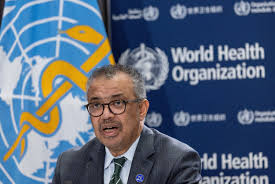
While WHO chief Tedros Adhanom Ghebreyesus insists the amendments “clearly respect national sovereignty” and do not grant WHO authority to enforce lockdowns or mandates, the U.S. disagrees.
“The WHO cannot mandate lockdowns, mask mandates, or force vaccines,” said Ghebreyesus in a post on X. “These amendments reinforce cooperation, not control.”
Trump’s “America First” Return: Health Policy as a Sovereignty Battleground
Immediate Rejection Post-Inauguration
President Donald Trump, who returned to the White House on January 20, 2025, wasted no time in reactivating his nationalist health agenda. On Day One, Trump initiated the U.S. withdrawal from the WHO—a policy move that had also marked his first term.
Even though the Biden administration had negotiated and provisionally agreed to the IHR changes in 2024, the Trump White House deemed those commitments non-binding and incompatible with its constitutional priorities.
Trump officials have argued that WHO’s framework does not sufficiently insulate U.S. innovation—particularly vaccine intellectual property—from potential international redistribution under crisis scenarios.
U.S. Rejection Draws Global Concern and Condemnation
WHO, Allies, and Global Health Leaders Speak Out
The move has sparked a wave of concern among global health advocates. Tedros issued a diplomatic rebuke, saying:
“We regret the U.S. decision to reject the amendments. Global threats require global unity.”
The deadline for countries to lodge objections or reservations was Saturday, July 19, 2025. While most member states supported the reforms, vaccine-skeptic groups in the U.S., U.K., and Australia have actively campaigned against them—especially in conservative circles on social media.
Despite left-leaning governments currently holding office in Britain and Australia, these nations too have faced grassroots pushback over the WHO amendments, mirroring America’s own internal divides.
Vaccine Skeptics and Anti-Globalists: Key Influencers in U.S. Policy Shift
Robert F. Kennedy Jr. and the Rise of Medical Nationalism
Robert F. Kennedy Jr.’s rise to Health Secretary—a dramatic appointment given his history of vaccine skepticism—has redefined the direction of U.S. public health. Critics argue that Kennedy’s influence is fueling mistrust in international institutions, especially in pandemic preparedness, where speed and cooperation are often crucial.
Kennedy and Rubio also alleged that the WHO’s pandemic response in the past had been subject to foreign political pressure, singling out China as a key concern.
“The WHO’s susceptibility to censorship and influence—especially from China—during outbreaks must not be overlooked,” their joint statement said.
This sentiment echoes a long-standing Republican concern dating back to the early COVID-19 pandemic, when China’s early reporting and the WHO’s deference came under intense scrutiny.
Intellectual Property at the Core of the Dispute
U.S. Balks at Sharing Vaccine IP Under Global Crisis Rules
A lesser-known but central tension in the WHO negotiations was over intellectual property rights. The Biden administration had sought stronger protections for U.S. pharmaceutical companies, especially over vaccine patents.
While the revised IHR doesn’t force countries to share proprietary technology, U.S. negotiators felt the amendments could lay the groundwork for such policies in future global health crises—potentially undermining the domestic biotech sector.
This concern became a rallying cry for both pharmaceutical lobbyists and nationalist policymakers, ultimately pushing the Trump administration toward full withdrawal.
Strategic Implications: Isolation or Autonomy?
What the U.S. Stands to Gain—or Lose
The decision to reject the WHO framework carries broad implications:
Potential Gains:
-
Policy independence on lockdowns, vaccines, and public health surveillance
-
Stronger defense of intellectual property in biotech and pharmaceutical innovation
-
Political messaging around “freedom,” “sovereignty,” and distrust of globalism
Potential Losses:
-
Reduced global coordination in outbreak detection and response
-
Diminished credibility in global health diplomacy
-
Risk of supply chain vulnerabilities during international emergencies
-
Loss of influence over future WHO reforms and global standards
If the U.S. faces another pandemic without WHO-aligned emergency protocols, it could find itself locked out of real-time global data, vaccine sharing programs, or diplomatic channels that may prove critical.
Is This a Strategic Pivot or Political Theater?
While Trump’s base applauds the exit as a bold defense of national sovereignty, critics warn it could leave the U.S. more vulnerable—not less—during future global health crises.
With Robert F. Kennedy Jr. steering federal health policy and Marco Rubio leading foreign affairs, the administration is betting that domestic control over health policy is more valuable than global alignment.
The only certainty: America’s pandemic playbook has now become a battleground in the war over nationalism versus internationalism.


More Stories
From Mushrooms to Murder Plots: The Chilling Case of Erin Patterson
Trump Tipped for Nobel Peace Prize After Cambodia Credits Him With Ending Deadly Border Clash With Thailand
Hezbollah Explodes in Rage as Lebanon Moves to Disarm Militias—Israel Keeps Bombing, US Pulls Strings