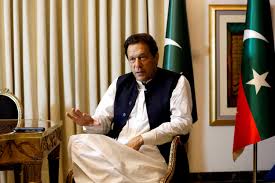
Over 35 PTI Leaders Sentenced as Political Crackdown Deepens
In a development that has shocked observers both domestically and internationally, more than 35 members and supporters of former Pakistani Prime Minister Imran Khan’s political party—Pakistan Tehreek-e-Insaf (PTI)—have been sentenced to 10 years in prison. Among them is a top-ranking opposition leader from Pakistan’s most politically powerful province.
The harsh sentences, issued by anti-terrorism courts in Lahore and Sargodha, raise new concerns about the erosion of democratic norms in Pakistan amid an ongoing crackdown against Imran Khan and his party.
Opposition Leader Among Those Convicted
Punjab Assembly’s Bhachar Given Maximum Term
On July 22, anti-terrorism courts handed down 10-year sentences to a wide range of PTI members and supporters. The most high-profile among them is Malik Ahmad Khan Bhachar, the Leader of the Opposition in the Punjab Assembly—a province that is not only the most populous but also politically decisive in national elections.
According to Pakistan’s Deputy Minister of Law Aqeel Malik, Bhachar was sentenced for his alleged role in riots that occurred after Khan’s arrest in May 2023. “Punjab Assembly’s Opposition Leader Malik Ahmad Bhachar has been awarded a 10-year sentence,” Malik stated at a press conference.
Despite the conviction, Bhachar remained defiant, pledging on social media that he would “not abandon” his support for Khan.
Broad Sweep Targets Sitting Lawmakers and Ex-Officials
Convictions in Lahore and Sargodha Courts
In addition to Bhachar, the anti-terrorism court in Sargodha sentenced a current legislator, a former Member of Parliament, and 32 PTI supporters to identical 10-year prison terms. The charges stem from attacks on government buildings during the wave of protests that erupted following Khan’s initial arrest.
Separately, the court in Lahore convicted eight prominent PTI figures, including:
-
Omar Sarfraz Cheema, former Governor of Punjab
-
Dr. Yasmin Rashid, former provincial health minister
-
Ejaz Ahmed Chaudhary, a sitting Senator
Notably, Shah Mahmood Qureshi, former foreign minister and senior PTI leader, was acquitted along with five others.
UN Panel Deems Khan’s Detention ‘Arbitrary’
The broader political context cannot be ignored. In 2024, a United Nations panel of legal experts determined that the detention of Imran Khan was “arbitrary” and in violation of international law, urging his immediate release. The experts concluded that the arrest appeared to be politically motivated, aimed at disqualifying him from participating in elections.
Since Khan’s arrest in August 2023 on various corruption charges—widely dismissed by his supporters as trumped-up—the former prime minister has remained behind bars. His incarceration triggered violent protests nationwide, some of which targeted military installations, leading to thousands of arrests.
Dual Justice? Civilian vs. Military Trials
Military Facilities Rioters Face Separate Proceedings
Interestingly, the recent convictions focus solely on attacks on police and civilian installations in cities like Lahore and Mianwali—Khan’s political strongholds. Those accused of attacking military sites are being tried in military courts, a move widely condemned by human rights organizations.
This bifurcated legal strategy has drawn sharp criticism for further eroding Pakistan’s constitutional boundaries and the principle of civilian supremacy over the military.
PTI Cries Foul, Vows to Appeal
PTI’s London-based spokesman Sayed Zulfikar Bukhari denounced the trials as “political spectacles” conducted with unprecedented urgency.
“These are show trials, being rushed through at breakneck speed—day-to-day hearings, even late-night sessions till 10:40 PM on Saturdays,” Bukhari told AFP.
He added that the convictions expose a “disturbing pattern of procedural impropriety, selective justice, and constitutional violations.”
The party has vowed to appeal the convictions in higher courts and fight back against what it terms a systematic dismantling of democratic opposition in Pakistan.
Media Blackout and Ongoing Suppression
Khan’s name has been effectively censored from national television, and thousands of PTI workers have reportedly been rounded up in the past year. Multiple party offices have been raided, and PTI’s digital communication channels have been disrupted or shadow-banned.
Despite the crackdown, PTI’s grassroots support remains strong, particularly among Pakistan’s younger, urban voters who see Khan as a symbol of resistance against entrenched military and dynastic political elites.
What It Means for Pakistan’s Fragile Democracy
Pakistan’s current coalition government, formed after controversial elections last year, has managed to keep PTI from returning to power. However, Khan’s unwavering popularity continues to haunt the ruling alliance and the military establishment that is widely believed to have backed them.
The sentencing of PTI’s top leadership may create a temporary vacuum, but political analysts warn it will not extinguish the party’s long-term prospects—especially if the trials are perceived as unjust.
Many international observers, including legal bodies and human rights groups, are already scrutinizing Pakistan’s judiciary and civil-military dynamics. The credibility of future elections, and Pakistan’s diplomatic standing, may be severely undermined if the trend of political repression continues.
A Dangerous Precedent?
The mass sentencing of political opposition figures in Pakistan is not just a legal matter—it is a litmus test for the country’s democratic integrity. The world is watching as Pakistan appears to slide deeper into authoritarianism, driven by military overreach and judicial complicity.
Whether these sentences stand the test of appeal, or spark another wave of civil unrest, remains to be seen. But one thing is clear: Imran Khan’s fight isn’t over—nor is Pakistan’s reckoning with its democratic future.

More Stories
From Mushrooms to Murder Plots: The Chilling Case of Erin Patterson
Trump Tipped for Nobel Peace Prize After Cambodia Credits Him With Ending Deadly Border Clash With Thailand
Hezbollah Explodes in Rage as Lebanon Moves to Disarm Militias—Israel Keeps Bombing, US Pulls Strings