America’s Most Notorious Student-Murder Case Ends With No Closure, No Apology—and No Death Penalty
In one of the most harrowing criminal cases in recent American memory, Bryan Kohberger—a former criminology Ph.D. student—was sentenced on Wednesday to four consecutive life sentences without the possibility of parole for the grisly stabbing murders of four University of Idaho students in 2022. The sentencing concludes a two-year saga that has captivated the nation and left four families grappling with the absence of justice—and the silence of a killer who refuses to explain why.
The Crime That Shook America
In November 2022, the quiet college town of Moscow, Idaho, was thrust into the spotlight when four students—Kaylee Goncalves (21), Madison Mogen (21), Xana Kernodle (20), and Ethan Chapin (20)—were brutally murdered in their shared off-campus residence. The killings appeared to be meticulously executed: the victims were stabbed while they slept, room to room, by a masked intruder who left no immediate trail.
The calculated nature of the murders, the absence of a clear motive, and the multi-state manhunt that followed created an atmosphere of national paranoia and global intrigue. Kohberger, a Ph.D. student in criminology at Washington State University—just across the state border—was arrested nearly 2,500 miles away in Pennsylvania over a month later, after investigators matched DNA on a knife sheath left at the crime scene to samples from his family.
A Plea Deal with No Satisfaction
Earlier this month, in a surprise move, Kohberger accepted a plea deal that spared him the death penalty in exchange for a guilty plea. The announcement came without prior input from the victims’ families, sparking outrage among some of them.
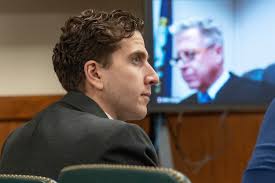
At Wednesday’s sentencing hearing in Boise, Kohberger declined to speak. Judge Steven Hippler addressed the silence directly:
“The need to know what is inherently not understandable makes us dependent upon the defendant to provide us with a reason,” Hippler said. “In my view, the time has now come to end Mr. Kohberger’s 15 minutes of fame.”
The Goncalves family condemned the plea deal as “shocking and cruel,” arguing that Kohberger deserved execution by firing squad. Their statement read:
“After more than two years, this is how it concludes—with a secretive deal and a hurried effort to close the case without any input from the victims’ families on the plea’s details.”
They further criticized the outcome, saying that Kohberger “gets to speak, form relationships, and engage with the world,” while their loved ones are “silenced forever.”
A Chilling Lack of Remorse
Throughout the proceedings, Kohberger exhibited little to no emotion. As grieving parents, siblings, and friends gave emotional testimonies describing the void left by the victims’ deaths, Kohberger remained passive and offered no apology or explanation.
Randy Davis, Kernodle’s stepfather, directly addressed him in court:
“Man, you’re going to go to hell. You’re evil. There’s no place for you in heaven. You took our children. You are going to suffer, man.”
Others echoed similar sentiments, calling Kohberger a “failure” and expressing hope that life behind bars would bring him the suffering he denied his victims.
A Case That Exposed Gaps in the System
The investigation was marked by secrecy and frustration. The Moscow Police Department initially withheld key information from the public, prompting a flood of online speculation and armchair detectives. From Reddit threads to TikTok “true crime” influencers, everyone had a theory. The absence of updates bred distrust and misinformation.
When Kohberger was eventually arrested, it was due to meticulous forensic work—a combination of cell phone triangulation, surveillance footage, and DNA evidence on a knife sheath found near one of the victims. Despite this growing mountain of evidence, Kohberger maintained his innocence for nearly two years, setting the stage for what would have been a sensational trial.
That trial never came.
Instead, the plea deal brought the legal proceedings to an abrupt end, leaving the public with more questions than answers and denying the victims’ families the opportunity to confront Kohberger under oath in a full trial setting.
Who Was Bryan Kohberger?
Kohberger’s background added a disturbing layer of irony to the case. As a doctoral student in criminology, he was reportedly interested in the psychology of criminals and had even posted academic surveys asking convicted felons about their thought processes during crimes. He studied just miles away from the University of Idaho and was known to cross state lines frequently.
His academic interest in crime, coupled with the precision of the killings, has led to endless speculation that the murders may have been a twisted act of “field research.” But without a confession, such theories remain speculative—and deeply unsettling.
What Now for the Families?
With Kohberger sentenced, the legal chapter of the case has officially closed. But for the families, the grief and lack of closure continue. Life without parole may ensure that Kohberger never walks free again, but for many, it feels like a hollow victory.
While some expressed faith that God would eventually judge Kohberger, others hoped justice might come from within the prison system.
The University of Idaho has since created memorial scholarships in the victims’ names, and a permanent memorial is planned on campus. But the trauma of that night—and the mystery behind it—still haunts Moscow.
Kohberger may have declined to speak, but his silence speaks volumes. The nation may never understand why a promising academic turned into a cold-blooded killer. As Judge Hippler said, this case should no longer be about the defendant.
“It’s time that he be consigned to the ignominy and isolation of perpetual incarceration.”
And with that, one of America’s most disturbing murder cases comes to a quiet, unsatisfying end—without answers, but with finality.


More Stories
From Mushrooms to Murder Plots: The Chilling Case of Erin Patterson
Trump Tipped for Nobel Peace Prize After Cambodia Credits Him With Ending Deadly Border Clash With Thailand
Hezbollah Explodes in Rage as Lebanon Moves to Disarm Militias—Israel Keeps Bombing, US Pulls Strings