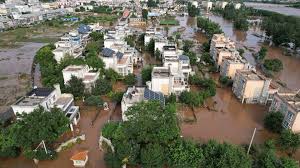
As Beijing begins recovering from one of its most severe rainstorms in recent memory, the Chinese capital is now focused on disaster recovery, risk mitigation, and restoring critical infrastructure—after more than 82,000 residents were evacuated due to life-threatening flooding.
Although the “Red” rainstorm alert—the highest warning level in China’s four-tier system—was lifted early Tuesday, officials are urging continued caution due to the ongoing risks of floods, landslides, and infrastructure collapse, especially in outlying districts.
Red Alert Lifted, But The Danger Isn’t Over
A Weakening System… with Lingering Threats
The Beijing Meteorological Bureau confirmed early August 5 that the powerful weather system had weakened and shifted eastwards, allowing the red alert to be lifted. However, residual storms and soil saturation still threaten many rural and suburban regions.
“People must not let up after strong rains have passed,” officials warned, highlighting the possibility of secondary disasters such as landslides and flash floods.
These warnings come as a grim reminder that natural disasters often strike in waves, with post-storm hazards being just as dangerous as the initial event.
Scale of Evacuation and Damage
82,000 People Relocated in 24 Hours
According to Xinhua, China’s state-run news agency, over 82,000 individuals were evacuated by Monday night due to imminent flooding threats. While no official return date has been announced, authorities are continuing to assess structural and environmental stability in affected regions.
Key Areas at Risk:
-
Miyun (Northeast): Epicenter of flood devastation; site of mass evacuations and most deaths.
-
Fangshan (Southwest): Ongoing water level monitoring.
-
Mentougou (West): Road closures, power outages, and utility failures.
-
Huairou (North): Soil erosion and river overflow threats.
Devastation in Miyun: Ground Zero of the Flooding
In Miyun, where dozens were killed last week, floodwaters began to recede by Tuesday—but the aftermath is jarring. Streets are littered with tree limbs, broken bricks, crumpled vehicles, and uprooted infrastructure.
Reporters described bent railings, twisted signage, and streets drowned in mud, as emergency workers began the long road to recovery.
The city’s utility teams and emergency response units, clad in reflective vests and hard hats, were seen clearing debris, restoring electricity, and pumping out stagnant water—a process that could take days or even weeks.
Rare Admission of Inadequate Preparedness
“Gaps” in Disaster Response Acknowledged
In a highly unusual move, a senior Chinese Communist Party official admitted shortcomings in local disaster preparedness. Yu Weiguo, party chief of the Miyun district, said:
“Our knowledge of extreme weather was lacking.”
This frank admission is a potential turning point in how China’s regional leaders communicate about climate-linked crises, and could pave the way for more transparency and accountability in future emergency management.
Economic and Operational Impacts
Business Disruptions and Logistics Delays
For Beijing’s economy and business leaders, the floods are a sharp reminder of the need for robust business continuity plans (BCPs) and resilient supply chain frameworks. Transportation infrastructure—including roads, metro lines, and freight corridors—was partially paralyzed in many districts, delaying goods, services, and workforce mobility.
Companies with operations in northern Beijing, Fangshan, and Mentougou reported:
-
Facility shutdowns
-
Staff displacements
-
Delays in last-mile logistics
-
Increased cost of restoration and safety audits
Government Response and Information Management
Focus on Recovery and Misinformation Control
During a Monday government meeting, Beijing’s municipal authorities emphasized the rapid restoration of “normal life and production”. At the same time, the Ministry of Public Security issued a warning against spreading “rumours” or exaggerating disaster scenarios—a reminder of the government’s tight control over information flow during crises.
CCTV, the state broadcaster, echoed the ministry’s warning, urging citizens to trust official channels and avoid misinformation, especially on social media platforms.
The Bigger Climate Picture: A Pattern Emerges
Widespread Climate Extremes Across China
China has faced back-to-back climate emergencies in recent weeks:
-
Deadly floods in northern provinces, including Beijing and Hebei
-
Record-setting rainfall in Hong Kong (four black rainstorm warnings in just over a week)
-
Soaring heatwaves in western and central China
-
Red alerts issued in southern regions like Shenzhen and Guangxi
This increasing volatility is fueling concern that China’s climate resilience strategy must evolve faster than previously expected.
China’s Dual Role in the Climate Crisis
Biggest Emitter, Renewable Leader
China remains the world’s largest emitter of greenhouse gases, a by-product of its massive industrial base and energy needs. But it is also a renewable energy superpower, investing more in solar, wind, and EV technology than any other country.
The Chinese government has committed to becoming carbon-neutral by 2060, and events like this flood are likely to accelerate green investment, especially in:
-
Urban climate resilience infrastructure
-
Smart flood detection systems
-
Rainwater management and early warning platforms
Key Takeaways for Business Leaders
For CEOs, risk managers, and urban planners, this flooding event holds key strategic insights:
1. Climate Change is a Business Risk
The floods are not isolated incidents—they are symptoms of a changing global climate that directly impact operations, supply chains, and workforce safety.
2. Infrastructure Investment is Now Critical
It’s no longer enough to retrofit existing systems. Proactive investment in climate-adaptive infrastructure (e.g., permeable roads, advanced drainage systems) must become a top budget priority.
3. Workforce Safety and Mobility Planning is Vital
Flood events displace employees, block roads, and halt public transportation. Business leaders must revisit mobility contingency plans and remote-work infrastructure to ensure continuity.
4. Communications Must Be Trustworthy and Fast
Crisis communication—internal and external—should be swift, accurate, and empathetic. Misinformation can create reputational and operational chaos during times of uncertainty.
From Disaster to Determination
Beijing’s latest flooding disaster is a wake-up call not just for China but for urban centers globally. As climate volatility increases, the need for early warning systems, transparent governance, and infrastructure resilience becomes more urgent than ever.
Nature is changing faster than we are adapting. That equation must flip—urgently.

More Stories
From Mushrooms to Murder Plots: The Chilling Case of Erin Patterson
Trump Tipped for Nobel Peace Prize After Cambodia Credits Him With Ending Deadly Border Clash With Thailand
Hezbollah Explodes in Rage as Lebanon Moves to Disarm Militias—Israel Keeps Bombing, US Pulls Strings