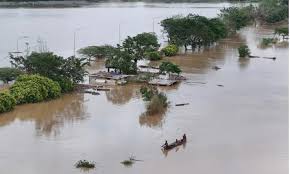
Northern Vietnam Ravaged by Flash Floods: 5 Dead, 1 Missing
Vietnam’s mountainous north was devastated over the weekend as sudden flash floods—triggered by intense rains—swept through Son La province, killing five people and leaving another still unaccounted for as of Tuesday afternoon. The violent weather event, which struck late Saturday, is the latest in a series of escalating climate-related disasters in the Southeast Asian nation.
A Deadly Night in Son La
Flash Floods Strike Without Warning
According to Vietnam’s Ministry of Agriculture and Rural Development, torrential downpours on Saturday night triggered abrupt flash floods that tore through local communities in Son La. The region, known for its steep terrain and scattered settlements, was caught off guard by the rapid deluge.
-
22 homes were completely destroyed, while dozens more were damaged.
-
Entire communities were forced to evacuate in the middle of the night, as rising water levels overwhelmed rivers and roads.
-
As of Tuesday, five bodies have been recovered. A sixth person remains missing, with search and rescue operations ongoing.
Rescue crews have been working relentlessly since Sunday to locate survivors and clear debris. Photos released by Vietnam News Agency (VNA) show emergency workers navigating wreckage and helping displaced families find shelter.
Agricultural Destruction: A Blow to Local Livelihoods
Crops, Livestock Washed Away
Beyond the human tragedy, the economic damage is mounting:
-
Over 180 hectares of farmland were devastated.
-
2,600 livestock animals, including cattle and poultry, were lost to the floodwaters.
For rural communities in Son La, agriculture is a lifeline. The destruction of both land and animals compounds the disaster, especially as most local families depend on small-scale farming to survive.
Not an Isolated Incident
Climate-Driven Disasters Becoming the New Normal
Vietnam is no stranger to extreme weather, but the frequency and intensity of recent events have raised alarm bells. Experts and government officials alike are drawing direct connections between these disasters and the broader climate crisis.
In just the past month:
-
Tropical Storm Wipha swept through Nghe An province, killing three and flooding nearly 4,000 homes.
-
A sudden whirlwind overturned a tourist boat in Ha Long Bay, a UNESCO World Heritage site, killing 39 people, including several children.
-
And just last year, Typhoon Yagi devastated the north, killing 345 people and causing over US$3.3 billion (RM14 billion) in damages.
According to climate scientists, Southeast Asia is already seeing higher rainfall volatility, faster tropical storm formation, and worsening monsoons due to global warming—all of which increase the risks of flash floods and landslides.
Government Response and Future Outlook
Emergency Measures Deployed, But Are They Enough?
The Vietnamese government has deployed emergency teams to Son La and neighboring provinces, focusing on:
-
Search and rescue
-
Temporary shelters for the displaced
-
Rapid assessments of infrastructure and agricultural damage
Yet critics argue that Vietnam’s disaster preparedness framework remains underfunded and outdated, especially for remote and mountainous regions like Son La. A 2024 audit revealed that early-warning systems are lacking in more than 40% of rural districts.
Vietnam’s Ministry of Natural Resources and Environment has called for urgent climate adaptation reforms, including:
-
Investment in flood-resistant infrastructure
-
Modernization of meteorological monitoring systems
-
Community-level emergency preparedness training
But with increasingly erratic weather patterns, reactive efforts may not be enough. The need for proactive, structural change—including stronger environmental protections and disaster-resilient urban planning—has never been more pressing.
A Regional Warning Signal
Vietnam as a Case Study in Climate Vulnerability
Vietnam ranks among the top 10 most climate-vulnerable countries in the world, according to the Global Climate Risk Index. With a long coastline, dense population, and heavy reliance on agriculture and fisheries, the nation is particularly exposed to:
-
Sea level rise
-
Storm surges and typhoons
-
Flash flooding and landslides
What’s happening in Son La is not just a domestic tragedy—it’s a cautionary tale for other developing nations, especially those in Southeast Asia.
Climate Risk is Business Risk
Why Corporate Leaders Should Pay Attention
For executives and investors with interests in Vietnam or similar markets, the message is clear: climate risk equals operational risk. From disrupted supply chains and workforce dislocation to soaring insurance premiums and regulatory volatility, the ripple effects of natural disasters are no longer abstract.
Key takeaways for CEOs:
-
Review risk exposure in vulnerable regions like northern Vietnam
-
Diversify supply chains away from high-risk zones
-
Integrate ESG factors more deeply into long-term strategic planning
-
Collaborate with local governments to build climate-resilient infrastructure and community programs
The Human and Economic Cost of Inaction
As rescue workers continue their search in Son La and families mourn their loved ones, Vietnam faces a harsh truth: climate change is already here—and the most vulnerable are paying the price. Unless swift and sustained action is taken, both by governments and corporate actors, tragedies like this will only grow more frequent and more severe.
The time to act isn’t tomorrow. It’s now.


More Stories
From Mushrooms to Murder Plots: The Chilling Case of Erin Patterson
Trump Tipped for Nobel Peace Prize After Cambodia Credits Him With Ending Deadly Border Clash With Thailand
Hezbollah Explodes in Rage as Lebanon Moves to Disarm Militias—Israel Keeps Bombing, US Pulls Strings