A Strategic Reset or a Crisis of Credibility?
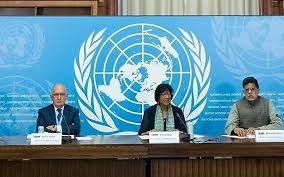
In a significant shakeup within the United Nations’ human rights machinery, all three members of the UN Commission investigating abuses in Israel and the Palestinian territories have stepped down, prompting an urgent search for replacements and raising questions about the future direction of the inquiry.
The announcement came from a UN spokesperson on Monday, confirming that the Commission of Inquiry (COI)—established in 2021 by the UN Human Rights Council (UNHRC)—will now undergo a full renewal of its leadership structure.
The Resignations: A Generational Shift or a Political Signal?
Pillay, Sidoti, Kothari: Three Titans Step Aside
The trio of experts—Navi Pillay (South Africa), Chris Sidoti (Australia), and Miloon Kothari (India)—each offered different explanations for their departure, though their decisions were reportedly coordinated.
-
Navi Pillay, 83, who previously led the international criminal tribunal for Rwanda and served as the UN High Commissioner for Human Rights, cited her age and long tenure in public service as the reason for stepping down.
-
Chris Sidoti, 74, called it an “appropriate time” to bring in new perspectives, subtly suggesting the need for organizational renewal without implying dissatisfaction or pressure.
-
Miloon Kothari, in his late 60s, simply remarked that “it had been an honour to serve,” offering no public elaboration on his exit.
All three were appointed to probe and report on alleged violations of international human rights and humanitarian law in both Israel and the Palestinian territories, including Gaza and the West Bank. The commission has submitted multiple reports, often with sharp conclusions regarding Israeli policies, and has drawn fierce criticism from Israeli officials.
Background: A Controversial Commission from Day One
Israel’s Rejection and Ongoing Diplomatic Tensions
The commission, formed in May 2021 following the 11-day war between Israel and Hamas, was mandated to examine “underlying root causes” of recurring violence. It was the first open-ended COI with a standing mandate on the Israeli-Palestinian situation, granting it a permanent investigative scope, unlike previous ad-hoc inquiries.
From its inception, Israel opposed the commission, calling it biased, unbalanced, and politically motivated. The Israeli government refused to cooperate with the body, and repeatedly challenged its findings, especially when they focused on alleged systemic discrimination or apartheid-like practices.
Despite the political firestorm, the commission continued its work with the backing of the majority of the UNHRC’s 47-member states—many of which are from the Global South and traditionally support Palestinian self-determination.
What Happens Next: Rebuilding the Commission
UNHRC Calls for Nominations by August 31
Following the mass resignation, Jurg Lauber, president of the UN Human Rights Council, announced that member states must now propose new candidates by August 31, 2025. The council will then appoint a new team of independent experts to continue the work.
This opens a critical window for diplomatic maneuvering, as powerful nations and blocs will likely lobby for ideologically aligned candidates. The makeup of the new commission could shape the narrative and direction of UN reporting on Israel-Palestine for years to come.
Why This Matters for Geopolitics and Global Governance
1. UN Reform Pressure Mounts
The commission’s mass resignation may serve as a catalyst for broader UN reform discussions. With bodies like the COI facing growing scrutiny over neutrality, mandate creep, and political bias, UNHRC’s operational credibility is once again in the spotlight.
2. Middle East Diplomacy Recalibrates
For businesses and leaders involved in Middle Eastern policy or investment, this development signals a potential diplomatic cooling-off period, as both Israel and Palestinian representatives prepare for the next round of UN engagements—this time with new personnel at the table.
3. Human Rights Advocacy and Narrative Control
Organizations in the humanitarian or legal space should anticipate a reset in how rights violations are documented, reported, and interpreted by global institutions. New commission members could shift the tone or methodology of future reports, affecting everything from international sanctions to public perception.
Regional Reactions: Silence, Strategy, and Speculation
-
Israel has yet to formally comment on the resignations but is expected to push for either dissolution or radical restructuring of the commission.
-
Palestinian officials and allied NGOs may express concern that the leadership vacuum could delay ongoing investigations, especially regarding recent escalations in Gaza.
-
Western governments, particularly the U.S. and members of the EU, may see this as a diplomatic opportunity to influence the commission’s future credibility and legitimacy.
Will the UN Seize the Moment?
The full resignation of the Israel-Palestine human rights commission offers a rare opportunity for reinvention. The question is whether the United Nations will use this moment to restore impartiality, transparency, and effectiveness, or whether geopolitical pressure will once again fracture its ability to act.
With new nominations due by August 31, stakeholders across diplomacy, business, and civil society will be watching closely—because what happens next won’t just affect Israel and Palestine. It will shape how global human rights are pursued, enforced, and politicized in the 21st century.


More Stories
From Mushrooms to Murder Plots: The Chilling Case of Erin Patterson
Trump Tipped for Nobel Peace Prize After Cambodia Credits Him With Ending Deadly Border Clash With Thailand
Hezbollah Explodes in Rage as Lebanon Moves to Disarm Militias—Israel Keeps Bombing, US Pulls Strings