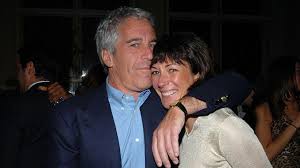
Ghislaine Maxwell Transferred to Minimum-Security Prison Amid DOJ Talks and Trump Pressure
In a development that is raising eyebrows across political and legal circles, Ghislaine Maxwell, the longtime associate of disgraced financier Jeffrey Epstein, has been transferred from a low-security Florida prison to a minimum-security facility in Texas, just days after a high-level meeting with Deputy U.S. Attorney General Todd Blanche.
Maxwell is currently serving a 20-year sentence for her role in recruiting and grooming underage girls for Epstein’s abuse. Her transfer comes as the Department of Justice (DOJ) and President Donald Trump’s administration face growing calls to unseal more details from the ongoing investigations into Epstein’s network — including potential accomplices still shielded from public view.
From Fences to Freedom? Inside Maxwell’s Prison Transfer
A Move to Bryan, Texas
Maxwell was recently relocated from FCI Tallahassee, a low-security federal prison in Florida, to Federal Prison Camp Bryan, a minimum-security facility in Texas. The Bureau of Prisons (BOP) confirmed the move but declined to comment on the specific reasons.
According to BOP standards, prison camps like Bryan are the least restrictive federal institutions, often lacking perimeter fencing and operating with reduced staff-to-inmate ratios. These facilities are generally reserved for non-violent or low-risk offenders.
Her previous prison in Florida had a double-fenced perimeter and higher oversight, which makes the timing of the downgrade particularly striking, especially following her meeting with Blanche.
Official Silence, Strategic Implications
Maxwell’s attorney, David Markus, confirmed the transfer but offered no additional comments. DOJ officials also remained tight-lipped. The BOP issued a general statement noting that inmate assignments are based on security assessments, without referencing Maxwell directly.
However, the optics of the move are hard to ignore, especially given its alignment with recent political developments and increasing pressure on the DOJ to pursue deeper investigations into Epstein’s web of influence.
Behind Closed Doors — The DOJ’s Secretive Meeting with Maxwell
What Was Discussed?
Deputy Attorney General Todd Blanche met with Maxwell last week in what appears to be a strategic outreach by federal prosecutors. While the content of the meeting remains undisclosed, sources close to the matter suggest it involved discussions about cooperation or disclosures involving other high-profile individuals connected to Epstein.
Blanche has not elaborated, and Maxwell’s legal team has remained cautious. However, some insiders believe the meeting may be related to ongoing efforts to unseal grand jury testimony linked to both Maxwell and Epstein’s indictments.
Why Now?
The meeting comes as Trump faces bipartisan calls — both from Democrats demanding transparency and conservatives seeking to protect high-profile allies — to declassify and disclose DOJ files linked to Epstein’s broader network. This includes names, flight logs, and law enforcement testimonies previously kept sealed under federal court orders.
With two federal judges in Manhattan currently reviewing motions to unseal grand jury transcripts, the political and legal environment is becoming increasingly combustible.
Trump’s Role and the Political Undertones
Pardon Speculation and MAGA Pressure
While Maxwell is still pursuing an appeal to the U.S. Supreme Court to overturn her 2021 conviction, there is growing speculation around whether Trump may grant her a pardon — or at least signal openness to one if she shares actionable information.
Trump has said he hasn’t “thought about it,” but insiders claim that some conservative figures within his circle believe that Maxwell’s cooperation could be used strategically — either to expose political rivals, divert media narratives, or create leverage within the intelligence and legal communities.
Markus has previously hinted that Maxwell would “welcome relief” from Trump if such an opportunity arose.
Unsealing the Truth — What’s at Stake
A Fight Over Grand Jury Testimony
The DOJ is currently seeking court permission to unseal law enforcement testimony tied to the grand juries that indicted Epstein and Maxwell. While these documents are typically kept secret, legal motions filed in Manhattan have triggered a debate over public interest vs. procedural protection.
Attorneys representing Maxwell, Epstein’s estate, and the alleged victims are expected to submit their positions to the court this week. Depending on the ruling, the court could unlock explosive testimony — potentially identifying new co-conspirators, clients, or official enablers.
A Question of Accountability
If the court grants the DOJ’s request, it could trigger new investigations, indictments, or subpoenas. Alternatively, a decision to maintain secrecy would fuel suspicions of elite protectionism and further erode public trust in the justice system’s willingness to fully pursue the Epstein network.
Maxwell’s reduced security status, paired with private meetings with top prosecutors, suggests she could play a pivotal role in either direction — as a protected informant, a political pawn, or a loose end still being managed behind closed doors.
Maxwell’s Legal Journey Isn’t Over
Supreme Court Appeal
Maxwell, who has consistently denied wrongdoing, is currently petitioning the U.S. Supreme Court to overturn her conviction, arguing that her trial was flawed and unfair. Legal experts believe her chances of success are slim, but the appeal buys her time and leverage, especially in a political climate where cooperation could bring benefits.
Her 2021 conviction found her guilty on multiple counts of sex trafficking and conspiracy, based on testimony from several survivors who accused her of recruiting and grooming them as minors for Epstein’s abuse.
Epstein’s Shadow Still Looms
Epstein, who died by suicide in 2019 while awaiting trial, had pleaded not guilty to federal sex trafficking charges. His death, and the lack of a public trial, left many questions unanswered — including who else was involved, who enabled the crimes, and why so many powerful people have avoided scrutiny.
Maxwell, by virtue of her proximity to Epstein, remains the last living thread to one of the most politically sensitive criminal cases in recent American history.
Is Maxwell the Key to Unlocking Epstein’s Secrets?
Ghislaine Maxwell’s prison downgrade may seem administrative, but in context, it signals a possible repositioning in the broader Epstein investigation. With DOJ efforts intensifying, court battles over secrecy escalating, and Trump’s political calculations entering the mix, the next few months could prove critical.
Whether Maxwell is preparing to cooperate, negotiate, or simply wait out the storm, one thing is clear: her story — and Epstein’s legacy — is far from over.

More Stories
From Mushrooms to Murder Plots: The Chilling Case of Erin Patterson
Trump Tipped for Nobel Peace Prize After Cambodia Credits Him With Ending Deadly Border Clash With Thailand
Hezbollah Explodes in Rage as Lebanon Moves to Disarm Militias—Israel Keeps Bombing, US Pulls Strings