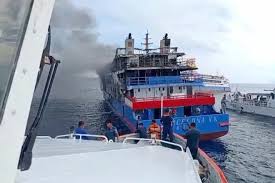
A Disaster at Sea Unfolds Near Likupang
A routine ferry journey in Indonesia turned into a terrifying maritime tragedy on Sunday, July 20, when the KM Barcelona 5 ferry erupted in flames near Sulawesi island, leaving at least five people dead and hundreds more scrambling for survival.
Indonesia’s Maritime Security Agency (Bakamla) confirmed that 284 people were safely evacuated, though two of the deceased remain unidentified. Videos from the scene show panic-stricken passengers jumping into the water with life jackets, while flames engulfed the vessel’s stern.
The Journey to Manado Cut Short by Inferno
The ferry was en route to Manado, the capital of North Sulawesi province, when the fire broke out near the resort town of Likupang—approximately an hour from its destination.
As the flames tore through the rear of the ship, passengers reportedly leapt overboard in a desperate attempt to escape the inferno. Many were rescued by nearby fishermen, who joined official rescue boats in hauling victims to safety.
Rescue Mission Mobilized Under Pressure
According to George Leo Mercy Randang, head of the Manado Search and Rescue Agency, time was of the essence: “What is important is that we are prioritising rescue before nightfall.”
The operation involved multiple vessels, including those from Bakamla. One video released by the agency shows a firefighting boat blasting water at the burning ferry, with thick black smoke still billowing into the sky.
Randang declined to confirm the total number of passengers on board at the time of the incident. The exact cause of the fire remains under investigation.
A Pattern of Maritime Tragedies in Indonesia
A Troubling Track Record
This is not the first time Indonesia’s ferry system has made headlines for all the wrong reasons. Just weeks ago, 19 people were killed when a ferry sank en route to Bali.
In March 2025, an Australian tourist died when a smaller boat carrying 16 capsized off Bali in rough waters. And back in 2018, more than 150 people drowned when a ferry sank in Lake Toba, one of the deepest lakes in the world, located on Sumatra island.
Lax Safety Standards and Harsh Weather
Experts frequently cite poor maintenance, insufficient safety equipment, and loose enforcement of regulations as contributing factors to Indonesia’s recurring marine disasters. As an archipelago of over 17,000 islands, ferries are a vital form of transport—but they often come with heightened risks.
The Bali ferry sinking earlier this month was attributed to bad weather, raising renewed questions about whether vessels are adequately equipped or captains sufficiently trained to navigate volatile maritime conditions.
Human Cost and Institutional Response
Trauma and Recovery
Those rescued from KM Barcelona 5 were taken to nearby health facilities, with several requiring medical treatment. No further fatalities have been reported since the initial rescue.
Authorities are working to identify the two deceased individuals who remain unnamed, and families are being notified as per protocol.
Investigation and Accountability
Neither Bakamla nor the search and rescue agency has commented on whether the ferry’s crew or company followed proper safety procedures. An internal review is underway, and further statements are expected from transportation and maritime safety officials in the coming days.
Calls are mounting from both public and civil society groups demanding stricter enforcement of safety codes, mandatory inspections, and more rigorous emergency preparedness training for ferry operators.
What This Means for Indonesia’s Marine Transit Future
Rebuilding Trust After Repeated Failures
For a nation so dependent on sea transport, these recurring disasters pose serious reputational risks—not only to public institutions but also to Indonesia’s fast-growing tourism industry.
Popular destinations like Bali, Sulawesi, and the Gili Islands rely heavily on ferry access. Each new incident raises doubts about safety and reliability, potentially deterring both domestic and international travelers.
The Leadership Opportunity
Indonesia’s government and maritime authorities now face a critical decision point: will they implement meaningful reforms to prevent further loss of life—or allow business as usual to continue?
Investing in safety inspections, upgrading older vessels, and enforcing strict penalties for non-compliance could save lives and restore public confidence. The cost of inaction, as Sunday’s disaster demonstrates, is measured in lives lost and national grief.
A National Wake-Up Call
The KM Barcelona 5 tragedy is the latest in a tragic series of Indonesian ferry disasters that underscore deep flaws in the country’s maritime safety ecosystem. With five lives lost and hundreds traumatized, the time for superficial responses is over.
If Indonesia is to fulfill its ambitions as a maritime power and tourist hotspot, it must overhaul its ferry system from the deck up—before more journeys end in catastrophe.


More Stories
From Mushrooms to Murder Plots: The Chilling Case of Erin Patterson
Trump Tipped for Nobel Peace Prize After Cambodia Credits Him With Ending Deadly Border Clash With Thailand
Hezbollah Explodes in Rage as Lebanon Moves to Disarm Militias—Israel Keeps Bombing, US Pulls Strings