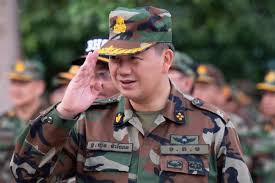
Mandatory Conscription Begins in 2026 as Phnom Penh Prepares for Long-Term Regional Volatility
In a bold pivot toward national security, Cambodian Prime Minister Hun Manet has announced the enforcement of mandatory military conscription starting 2026, citing mounting tensions with neighboring Thailand following a deadly border clash in May.
The move revives a 2006 conscription law that had never been implemented—until now. The military draft will require all Cambodian citizens aged 18 to 30 to serve a 24-month term, extending beyond the 18-month period outlined in the original law.
Hun Manet’s surprise announcement marks a significant escalation in Cambodia’s defense posture and signals growing concern over geopolitical instability in the Emerald Triangle, a disputed border zone where Cambodia, Thailand, and Laos intersect.
From Dormant Law to National Priority
Cambodia’s Long-Shelved Draft Law Reawakened by Violence
The military conscription law, passed nearly two decades ago in 2006, was previously viewed as symbolic—a legal framework that remained unused during years of relative peace. That changed after a border firefight in May 2025, which resulted in the death of a Cambodian soldier and triggered a cascade of diplomatic and economic tensions with Thailand.
“This episode of confrontation is a lesson for us,” Hun Manet said in a speech at the Royal Gendarmerie Training Centre in Kampong Chhnang province. “It is an opportunity to reform and strengthen our military.”
In that speech, he announced:
-
Full enforcement of the conscription law from 2026
-
Extension of the service period to 24 months
-
A renewed commitment to increase the national defense budget
The policy shift reflects the Cambodian government’s urgency to professionalize its armed forces and signal deterrence to regional adversaries.
Border Clash Turns Political Crisis
The Emerald Triangle Becomes a Flashpoint for Regional Instability
The conscription decision follows a sharp deterioration in Cambodia–Thailand relations. In May, a Cambodian soldier was killed in a firefight with Thai troops near the Emerald Triangle, a long-contested region rich in natural resources and national symbolism.
Following the incident:
-
Cambodia closed border checkpoints and suspended fuel and gas imports from Thailand
-
A diplomatic call between Hun Sen (former Cambodian leader) and Thai PM Paetongtarn Shinawatra was leaked, triggering a judicial probe in Bangkok
-
Paetongtarn Shinawatra was suspended from office, pending an ethics investigation related to her handling of the incident
This regional flare-up has placed Southeast Asia on alert, raising fears that border skirmishes could escalate into prolonged conflict, especially as both countries recalibrate domestic policies to project strength.
Why Cambodia’s Move Matters
Rewriting the Regional Military Balance
Cambodia’s decision to activate military conscription is unprecedented in modern times. While Thailand already operates a draft system (via a national lottery for young men), Cambodia had maintained an all-volunteer force—until now.
By implementing a nationwide draft, Phnom Penh aims to:
-
Expand troop numbers across active duty and reserve forces
-
Create a trained civilian corps to support border defense and logistics
-
Develop a modern military infrastructure, starting with grassroots readiness
“We are not building an army to invade anyone’s territory,” Hun Manet clarified. “But to defend our sovereignty and secure our people.”
Behind the scenes, analysts view this as an early move to rebalance Cambodia’s defense strategy, which has long relied on tactical alliances and a small professional force. The upcoming draft adds manpower—but also injects nationalist fervor into a potentially volatile region.
Political, Economic, and Human Capital Implications
What CEOs, Investors, and Observers Need to Watch
Cambodia’s new military policy will have ripple effects across sectors and borders. Key developments to monitor include:
1. Labor Market Disruption
Pulling thousands of young Cambodians into military service will temporarily shrink the available workforce, especially in manufacturing and agriculture—two vital pillars of the Cambodian economy.
2. Investor Uncertainty
Foreign investors, particularly those with operations near the Thai-Cambodian border, may reassess risks related to logistics, cross-border trade, and political stability. The gas import ban from Thailand already highlights how quickly tensions can affect supply chains.
3. Rising Defense Sector Spending
The commitment to increase defense spending could accelerate procurement deals, training programs, and public-private partnerships focused on cybersecurity, communications, and logistics.
Southeast Asia’s New Security Puzzle
Are We Witnessing a Regional Arms Race?
Cambodia’s policy change comes at a time when regional militarization is on the rise. From China’s assertiveness in the South China Sea to Myanmar’s internal conflicts and Thailand’s own military reshuffling, Southeast Asia is entering a more volatile defense era.
What separates Cambodia’s move is its reactive nature—a direct response to a specific flashpoint. Still, it sets a precedent for other nations in the region to reassess their defense readiness and civilian engagement strategies.
Stability Is Not a Given—Prepare for Policy-Driven Volatility
For executives and geopolitical risk managers, Cambodia’s sudden conscription rollout reinforces a timeless lesson:
-
Politics can upend peacetime assumptions overnight.
-
Workforce planning must account for state-driven mobilization policies.
-
Regional strategies must go beyond trade and supply chains—into defense, diplomacy, and security.
This is especially crucial in emerging markets, where long-dormant laws can be rapidly activated to serve short-term geopolitical goals.
Five Signals from Cambodia to Monitor Closely
-
Final Conscription Guidelines – How will students, women, and the diaspora be treated under the new policy?
-
Defense Budget Allocations – What sectors will receive priority funding: weapons, cyber, personnel, or infrastructure?
-
Thailand’s Response – Will Bangkok escalate or attempt diplomatic de-escalation?
-
Public Sentiment – How will Cambodians react to two years of mandatory service?
-
Regional Repercussions – Will Laos or Vietnam modify defense postures in response?

More Stories
From Mushrooms to Murder Plots: The Chilling Case of Erin Patterson
Trump Tipped for Nobel Peace Prize After Cambodia Credits Him With Ending Deadly Border Clash With Thailand
Hezbollah Explodes in Rage as Lebanon Moves to Disarm Militias—Israel Keeps Bombing, US Pulls Strings