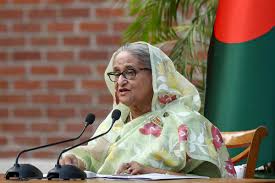
UN Death Toll: 1,400 Lives Lost Amid Political Turmoil
In a stunning revelation that could shift the global conversation on authoritarian regimes, the BBC has unveiled an audio analysis implicating Bangladesh’s ousted Prime Minister Sheikh Hasina in ordering lethal force during last year’s nationwide student-led protests. The fallout is rapidly escalating, with international human rights organizations, governments, and media turning their attention to what many are calling a case of crimes against humanity.
Context: Bangladesh’s Political Boiling Point
The protests, which erupted on July 1, 2024, were initially centered on the reform of Bangladesh’s controversial quota system for public sector jobs—a decades-old policy criticized for unfairly limiting merit-based access. Sparked by university students, the movement quickly gained momentum and morphed into a broader uprising against Hasina’s increasingly autocratic rule.
Despite Hasina’s January 2024 re-election—her fourth consecutive term in an election largely considered a sham by international observers—the protests shook the foundations of her regime. By July 16, the situation had spiraled out of control, prompting the government to respond with brute force.
Audio Leak: “Use Lethal Weapons”
Now, the BBC’s Eye Investigations unit has analyzed a critical piece of evidence that could prove Hasina’s direct involvement in the state-sponsored crackdown. A leaked audio recording, dated July 18, 2024, allegedly features Hasina instructing security forces to “use lethal weapons” and to “shoot wherever they find them”—a chilling directive that aligns with the timeline of mass casualties.
Independent forensic audio experts reviewed the clip and determined that it was highly authentic. The BBC concluded there was “no evidence” of manipulation or synthetic generation, dismissing any claims that the clip was AI-generated or doctored.
Bangladesh’s police have corroborated the voice by matching it with verified recordings of Hasina’s previous public addresses.
The Death Toll: Up to 1,400 Lives Lost
The United Nations estimates that up to 1,400 people were killed during the crackdown between July and August 2024. Most of the victims were unarmed student demonstrators. Many were reportedly shot at close range or disappeared after being taken into custody.
International outrage grew as horrifying footage of the violence circulated online. Human rights watchdogs labeled it a “massacre” and demanded immediate investigations.
Hasina fled Bangladesh shortly thereafter, seeking refuge in India. She has since refused to return to Dhaka, where a trial in absentia began on June 1, 2025. The charges include crimes against humanity—one of the most severe accusations that can be leveled against a former head of government.
Hasina’s Defense: “Regrettable Breakdowns in Discipline”
Despite the mountain of evidence, Hasina’s legal team—which admits to having no current contact with the ex-prime minister—has filed motions to dismiss the charges.
Her now-outlawed political party, the Awami League, issued a formal rebuttal. It “categorically denies the charges,” claiming instead that “breakdowns in discipline among some members of the security forces” were to blame for the deaths, not any explicit command from the party leadership or Hasina herself.
Still, the leaked audio contradicts these claims and has become the centerpiece of the prosecution’s case.
A Broader Trend of Crackdowns in South Asia
Hasina’s alleged orders are not occurring in a vacuum. They reflect a worrying regional trend of government crackdowns on youth-led movements—from Pakistan’s suppression of anti-military protests to India’s harsh responses to dissent on university campuses. The Bangladeshi case is uniquely severe in its alleged death toll and centralization of blame.
Diplomatic pressure is mounting on India to clarify its stance, as it continues to harbor Hasina despite extradition requests.
Previous Conviction: Contempt of Court
Adding to her legal woes, Hasina was convicted of contempt of court on July 2, 2025, receiving a six-month sentence. Although symbolic compared to the trial for crimes against humanity, it reinforces the perception that she remains a fugitive from justice.
What’s Next: Legal, Political, and Diplomatic Consequences
The trial will now depend heavily on the admissibility and forensic integrity of the BBC-analyzed audio clip. Legal experts say that if accepted, it could result in a historic conviction—potentially the first time a former South Asian premier is convicted for crimes against humanity in absentia.
Meanwhile, the geopolitical ripple effects are just beginning. The international community faces a test of principle—will it pressure India to extradite a political ally, or sidestep justice for the sake of regional diplomacy?
Either way, Sheikh Hasina’s legacy, once heralded for economic growth and political stability, now teeters on the brink of historical infamy.


More Stories
From Mushrooms to Murder Plots: The Chilling Case of Erin Patterson
Trump Tipped for Nobel Peace Prize After Cambodia Credits Him With Ending Deadly Border Clash With Thailand
Hezbollah Explodes in Rage as Lebanon Moves to Disarm Militias—Israel Keeps Bombing, US Pulls Strings