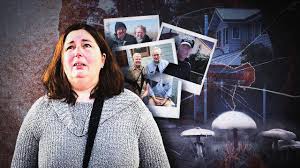
In one of Australia’s most chilling and bizarre criminal cases in recent memory, 50-year-old Erin Patterson has been found guilty of murdering three members of her estranged husband’s family by serving them a lunch of beef Wellington laced with death cap mushrooms.
The verdict, delivered by a 12-member jury after a high-profile two-month trial, also found Patterson guilty of attempted murder of a fourth guest who survived the fatal meal.
The case—dubbed the “Mushroom Murders” by global media—captivated audiences from Melbourne to New York, with podcast hosts, filmmakers, and true crime aficionados descending on the quiet town of Morwell, Victoria, where the trial was held.
A Family Lunch Turns Fatal
On July 29, 2023, Patterson invited her estranged in-laws Don and Gail Patterson, her aunt-in-law Heather Wilkinson, and Heather’s husband Ian Wilkinson, a local Baptist pastor, to her country home for a seemingly routine family lunch.
On the menu: an elaborate individual beef Wellington, carefully crafted with high-quality beef and a mushroom duxelles wrapped in golden pastry.
The gathering began warmly, with prayer and small talk. But within days, three of the four guests were dead from organ failure caused by amatoxin poisoning—the deadly compound found in death cap mushrooms, one of the most toxic fungi in the world.
The Only Survivor Speaks Out
The sole survivor, Ian Wilkinson, spent weeks in intensive care and told the court how four grey plates were served to the guests, while Patterson ate from a separate orange plate—a detail that prosecutors used to underscore premeditation.
Despite surviving, Wilkinson said he had no idea why Patterson would target him.
Patterson’s Defense: A “Terrible Accident”
Throughout the trial, Patterson maintained her innocence, claiming the poisonings were a tragic accident. She told the court she had no intention to harm her guests and believed the mushrooms she used were edible.
Her defense lawyer, Colin Mandy, insisted she “never deliberately sought out death cap mushrooms”, calling the deaths a “terrible accident”, not murder.
“She didn’t do it deliberately. She didn’t do it intentionally,” Mandy told the jury. “She denies knowing the mushrooms were deadly.”
Prosecution Paints Picture of Deception
But the prosecution presented a different story—one built on digital evidence, forensic testing, and deception:
-
Medical Lies: Patterson reportedly told her guests she had cancer, seeking advice on how to break the news to her children. But no such diagnosis existed in her medical records.
-
Food Dehydrator Dumped: She initially denied owning a food dehydrator, but police later recovered one at a nearby landfill, contaminated with traces of the same poisonous mushrooms.
-
Search History: Investigators also found browsing history on her home computer showing that she had accessed websites detailing death cap mushroom locations, including a nearby forested area.
“I agree that I lied because I was afraid I would be held responsible,”
Patterson admitted under cross-examination.
“Super Sleuth” Turned Suspect
Adding a surreal twist to the case, it emerged that Patterson was a true crime enthusiast, known in her local community as a “super sleuth”. She regularly participated in Facebook forums dissecting high-profile murder cases, edited the village newsletter, and helped film church services.
This passion for criminal detail left prosecutors and observers questioning whether her obsession morphed into a sinister plan of her own.
A Forensic Deep Dive Into Beef Wellington
The trial included testimony from:
-
Mushroom toxicologists, who confirmed the poisoning was consistent with amatoxin ingestion
-
Computer experts, who examined Patterson’s internet activity
-
Medical professionals, who detailed the excruciating decline of the victims
-
Detectives, who retraced Patterson’s steps leading up to the fatal meal
“It was very apparent that this was not survivable,”
testified Dr. Stephen Warrillow, an ICU specialist, about the rapid organ failure experienced by the victims.
A Town and a Nation Obsessed
Patterson’s trial became a media circus, drawing journalists from around the world and even inspiring a Melbourne street artist to paint a mural of her—capturing the cultural grip of the case.
The tragedy also sparked debate about food safety, toxic fungi, and the legal handling of domestic-related murder cases in Australia.
The scale of public interest rivaled that of historic Australian crimes, and true crime producers are already reportedly in talks for a streaming documentary or dramatic adaptation of the “Mushroom Murders.”
Verdict and Aftermath
After a week of jury deliberation, Patterson was found guilty on all charges. She now faces life in prison, with sentencing expected in the coming weeks.
The conviction closes a harrowing chapter for the Patterson and Wilkinson families but raises ongoing questions about motives, mental health, and the fine line between fascination and obsession.
When Curiosity Becomes Catastrophe
What began as a Sunday family lunch ended in international headlines, forensic scrutiny, and national heartbreak. Erin Patterson’s transformation from community volunteer to convicted killer leaves a trail of grief—and a reminder that some obsessions are deadly.


More Stories
From Mushrooms to Murder Plots: The Chilling Case of Erin Patterson
Trump Tipped for Nobel Peace Prize After Cambodia Credits Him With Ending Deadly Border Clash With Thailand
Hezbollah Explodes in Rage as Lebanon Moves to Disarm Militias—Israel Keeps Bombing, US Pulls Strings