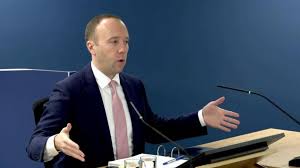
Matt Hancock’s Covid Inquiry Testimony Sparks Outrage Among Bereaved Families
Matt Hancock, the UK’s former health secretary, is once again at the centre of a political and ethical storm. During a highly anticipated session at the UK Covid-19 inquiry, Hancock defended the government’s decision to discharge untested hospital patients into care homes during the early stages of the pandemic—calling it “the least worst option.”
However, his remarks have drawn sharp criticism from bereaved families and care home leaders, who accuse him of deflecting blame, avoiding accountability, and rewriting history.
The Controversial Policy: Discharging Patients Without Testing
A Decision That Echoed Through the Care Sector
In early 2020, as the pandemic intensified, hospitals across the UK were under enormous strain. The response: a policy to rapidly discharge patients—many untested for Covid-19—into care homes, freeing up beds in overwhelmed NHS facilities.
“Nobody has yet provided me with an alternative that would have saved more lives,” Hancock claimed in his testimony.
“None of the options were good. It was the least worst decision that could have been taken at the time.”
Yet this policy was later ruled “irrational” and unlawful by the High Court in 2022. Critics argue that it seeded mass outbreaks in care homes, leading to thousands of avoidable deaths.
Families React: ‘Excuses, Not Accountability’
Covid-19 Bereaved Families for Justice Respond
For many families who lost loved ones, Hancock’s remarks were deeply painful.
“We’ve waited years for this moment, hoping for truth. What we got was finger-pointing and evasion,” said a spokesperson for Covid-19 Bereaved Families for Justice UK, representing nearly 7,000 individuals.
“Our loved ones were left to die without PPE, without testing or protection. Other countries protected their care homes. Ours were abandoned. Hancock lied to us then—and he’s still dodging responsibility now.”
The group accused Hancock of portraying himself as powerless, a narrative they say is “devoid of truth” and “insulting” to those who suffered irreparable losses.
A ‘Generational Slaughter’ in Care Homes
46,000 Deaths, and an Inquiry Still Unfolding
From March 2020 to January 2022, nearly 46,000 care home residents in England and Wales died with Covid-19. Many of these deaths occurred in the pandemic’s first wave, as care facilities were flooded with discharged patients—often with no access to testing or proper isolation procedures.
Earlier this week, a senior civil servant described the toll as a “generational slaughter” in a written statement to the inquiry.
A care home owner testified that she had refused to accept untested patients—and was threatened with being reported for “bed blocking.”
The Legal and Ethical Fallout
High Court’s Verdict and Hancock’s Defence
The 2022 High Court ruling found that the government’s guidance—allowing untested patients to be placed in care homes without isolation—was unlawful. Hancock said the decision had been “very frustrating” and noted he hadn’t been asked to give evidence in that case.
“Had I been able to give evidence, the judgment might have been different,” he insisted.
He further claimed the policy was a “government decision” but driven by NHS England’s chief executive at the time, Simon Stevens—who has not been called to testify in the inquiry, despite growing demands from campaigners.
Blame Game or Systemic Failure?
Public Health England and ‘The Protective Ring’ Myth
Hancock deflected further criticism toward Public Health England (PHE), accusing the agency of failing to grasp the urgency of the crisis.
“I got so frustrated with PHE, I abolished them,” he said—referring to their eventual replacement with the UK Health Security Agency.
He also walked back his much-criticized claim that a “protective ring” had been placed around care homes, admitting it was not an “unbroken circle.”
On staffing shortages, Hancock offered a controversial answer:
“We knew that people would do what they needed to do.”
Many saw that as a dismissive attitude toward the carers who bore the brunt of the pandemic with minimal support.
Lessons from Hindsight: Could It Have Been Prevented?
Isolation and Testing: The Missed Opportunity
Hancock stated that isolation of discharged patients was not clinically advised at the time. But, he conceded: “In hindsight, it should have been.”
Other countries, such as Germany and South Korea, implemented strict isolation policies and prioritized protecting care homes early. Critics argue that similar action in the UK could have saved thousands of lives.
Inquiry Still Ongoing: What’s Next?
Focus Shifts to Accountability and Reform
The care sector module of the inquiry is scheduled to continue until the end of July, and more evidence is expected to be presented on the decision-making failures and communication breakdowns that plagued the sector during the pandemic’s early days.
Whether this inquiry will deliver the truth, justice, and reform families are seeking remains to be seen. But what’s clear is that the wounds from the care home crisis are far from healed.
Key Takeaways
-
Matt Hancock defended discharging untested patients into care homes as “least worst option”
-
Bereaved families condemned his testimony as excuse-laden and lacking accountability
-
46,000+ care home residents died with Covid between March 2020 and January 2022
-
The 2022 High Court ruling found the policy to be unlawful and irrational
-
Hancock shifted blame to NHS leadership and Public Health England
-
The care sector inquiry will run through July, with pressure mounting for further testimony and accountability


More Stories
From Mushrooms to Murder Plots: The Chilling Case of Erin Patterson
Trump Tipped for Nobel Peace Prize After Cambodia Credits Him With Ending Deadly Border Clash With Thailand
Hezbollah Explodes in Rage as Lebanon Moves to Disarm Militias—Israel Keeps Bombing, US Pulls Strings